
The Best Espresso Machines Under $500
The best espresso machines under $500 for every setup, including compact semi-automatics and models with built-in grinders.
 By Gary Gray
Updated November 4, 2026
A capable espresso setup does not have to dominate your budget.
The machines in this roundup are priced under $500. Each one pairs a pump-driven brew head with a steam wand or milk frother, and most add temperature control, a built-in grinder, or both.
They suit home brewers moving up from pods or a drip machine who want to make espresso and milk drinks themselves.
We compared published specifications, independent reviews, and Amazon owner ratings for semi-automatic espresso machines in this price range.
For other price ranges and machine types, see our Espresso Machines category.
The list below opens with our four award picks. We ranked the remaining models by CML Score, calculated with the published method on our How We Review page. After that, the buying guide explains how to match a machine to your counter space, milk habits, and grinder plans.
| Award | Product | CML Score About CML ScoreThe CML Score is calculated with the published method on our How We Review page. Learn more › | |
|---|---|---|---|
| Best Overall |
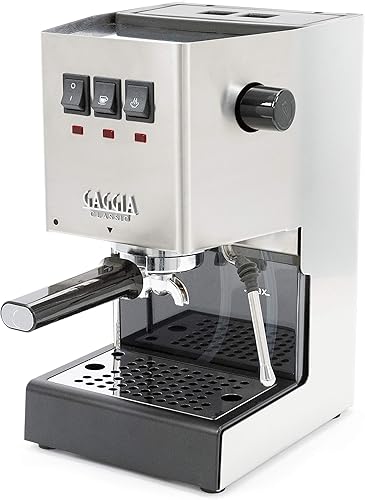 Gaggia Classic Evo Pro Espresso Machine |
8.3/10 | Buy |
| Best Value |
 Calphalon Temp iQ Semi-Automatic Espresso Machine |
8.4/10 | Buy |
| Best Budget |
 Gevi ECMI0-SS0A1 20-Bar Espresso Machine |
8.6/10 | Buy |
| Best Premium |
 Breville Bambino Plus Espresso Machine |
8.6/10 | Buy |
 AMZCHEF FC3103 Dual Boiler Espresso Machine |
8.4/10 | Buy | |
 Ninja Luxe Café Mini ES301 Espresso & Drip Combo |
8.4/10 | Buy | |
 Electactic CM5020B 20-Bar Espresso Machine |
8.3/10 | Buy | |
 Electactic CM5431D 15 Bar Espresso with Grinder |
8.3/10 | Buy | |
 EUHOMY CM002 Espresso Machine with Grinder |
8.3/10 | Buy | |
 COUPLUX Espresso Machine with Grinder, 58mm |
8.1/10 | Buy | |
 Chefman Crema Supreme 15-Bar Espresso Machine |
8.0/10 | Buy | |
 Breville Bambino BES450 Espresso Machine |
7.8/10 | Buy |
Gaggia Classic Evo Pro Espresso Machine
This semi-automatic machine from Gaggia uses a 9-bar extraction setting, a commercial-style 58mm portafilter, and a steam wand. It suits home baristas who want a traditional layout and plan to pair it with a separate grinder.
Pros
- Made in Italy with solid steel housing
- Commercial 58mm portafilter and baskets
- Commercial steam wand for microfoam
- Updated boiler resists scale and corrosion
- Quieter brewing with improved pump mounting
Cons
- No built-in grinder
- Heavy at 20 pounds
Calphalon Temp iQ Semi-Automatic Espresso Machine
This semi-automatic espresso machine offers a 15-bar Italian pump and thermoblock heating with PID temperature control for consistent extraction. Its 58mm portafilter and included steam wand suit home baristas who want espresso and milk drinks.
Pros
- 15-bar Italian pump for full flavor extraction
- Thermoblock heating with PID temperature control
- Includes 58mm portafilter and steam wand
- Removable 2L water reservoir
- Warming tray on top
Cons
- Some owners report a tight-fitting filter basket
- Some owners report durability problems
- Exterior mixes plastic with stainless steel
Gevi ECMI0-SS0A1 20-Bar Espresso Machine
This semi-automatic espresso machine combines a built-in grinder and milk frother in one compact unit, so you can grind, brew, and steam with one machine. With 20 bar pressure and a 58mm portafilter, it aims to deliver rich espresso shots and creamy milk-based drinks without needing separate equipment.
Pros
- Integrated grinder with 30 grind settings
- Powerful steam wand for milk frothing
- Removable 2.3L water tank for easy cleaning
- Adjustable shot volume and pre-infusion
- Stainless steel build with cup warmer
Cons
- Milk is frothed manually with the steam wand
- Only dual-wall filter baskets included
Breville Bambino Plus Espresso Machine
A compact semi-automatic espresso machine that heats up in seconds and includes an automatic steam wand for microfoam. Its low-pressure pre-infusion and PID temperature control help produce balanced shots, while its small footprint fits easily on tight countertops. It suits beginners and small kitchens where milk drinks are part of the daily routine.
Pros
- Fast heat-up time (3 seconds)
- Automatic steam wand simplifies milk frothing
- Compact footprint fits small counters
- Consistent extraction with pre-infusion and PID
- Auto purge after steaming resets brew temperature
Cons
- Brewing and steaming share one heating system
- No built-in grinder; requires ground coffee
AMZCHEF FC3103 Dual Boiler Espresso Machine
A semi-automatic espresso machine with dual boilers and PID control for precise brewing and steaming. Its hands-free frother and OPV system suit home baristas wanting consistent shots and microfoam without complex workflow.
Pros
- OPV regulates pressure within 9 to 12 bar
- Hands-free automatic milk frothing
- Dual PID temperature control
- 58mm commercial portafilter
- Customizable brew and steam settings
Cons
- Cannot brew and steam simultaneously
- Heavy at 24.4 pounds
Ninja Luxe Café Mini ES301 Espresso & Drip Combo
The Ninja Luxe Café Mini packs a built-in grinder, precision scale, and manual steam wand into a compact 2-in-1 espresso and drip coffee maker. It uses Barista Assist Technology to auto-calibrate grind, dose, temperature, and pressure, so the machine handles most of the dialing in for newcomers.
Pros
- Built-in grinder and scale
- Manual steam wand for microfoam
- Compact size, 30% smaller than Pro
- Adaptive brewing adjusts temperature and pressure
- Brews espresso and drip coffee
Cons
- Auto calibration leaves less room for manual dialing in
- Heavy at 19 pounds
- Manual steam wand still takes practice for latte-quality foam
Electactic CM5020B 20-Bar Espresso Machine
This stainless steel semi-automatic machine combines a 30-setting grinder with a 20-bar pump and PID temperature control, aiming for consistent shots and microfoam at home. It suits beginners or home baristas who want an all-in-one setup without extra accessories.
Pros
- Integrated grinder with 30 settings
- PID temperature control for stability
- 20-bar pump and 1500W motor
- Includes portafilter, filters, pitcher, tamper
- Removable 2.8L water tank
Cons
- Large footprint (15.75" deep, 26 lbs)
- Milk is frothed manually with the steam wand
Electactic CM5431D 15 Bar Espresso with Grinder
This semi-automatic espresso machine from Electactic combines a built-in grinder with a 15-bar pump and a commercial 58mm portafilter, which suits home baristas who want fresh-ground espresso without a separate grinder. Its upgraded anti-clog chute and included tamping tools help streamline the workflow, and the steam wand delivers microfoam for lattes and cappuccinos.
Pros
- Integrated grinder saves counter space
- Anti-clog design handles oily beans
- 58mm commercial portafilter
- Includes tamper, milk jug, and filter baskets
- Removable water tank simplifies cleaning
Cons
- Bean input only; no pre-ground option listed
- Milk is frothed manually with the steam wand
EUHOMY CM002 Espresso Machine with Grinder
The EUHOMY CM002 combines a built-in grinder with 30 grind settings, a 58mm portafilter, and PID temperature control for consistent shots. It also includes a steam wand for milk frothing, so it covers espresso, lattes, and cappuccinos without a separate grinder.
Pros
- 30 grind settings for versatile brewing
- PID control for stable temperature
- 58mm portafilter for even extraction
- Integrated grinder and steam wand
- Easy to clean removable parts
Cons
- Some owners report a learning curve at first
- Build mixes plastic with stainless steel
COUPLUX Espresso Machine with Grinder, 58mm
This all-in-one espresso machine combines a 30-setting conical burr grinder with a 15-bar Italian pump and 58mm portafilter for consistent shots. Its 10mm steam wand produces strong, dry steam for silky microfoam, and four brew temperature settings allow fine-tuning for different roasts.
Pros
- Built-in anti-static grinder reduces mess
- Adjustable brew temperature for different roasts
- Powerful steam wand for latte art
- Commercial 58mm portafilter and baskets included
- 1-year service commitment; replies within 24 hours
Cons
- Brew temperature set via button combination, no dedicated dial
- Bulky at 13.7 inches deep and 16.1 inches tall
Chefman Crema Supreme 15-Bar Espresso Machine
A semi-automatic espresso machine with an integrated conical burr grinder, 30 grind settings, and a 15-bar pump. It includes a milk frother and a large 3-liter removable water tank, which suits home baristas who want fresh-ground espresso without a separate grinder. Owner reviews generally praise its espresso and steam wand, though some describe it as fussy to dial in.
Pros
- Integrated conical burr grinder with 30 settings
- 15-bar pump for rich espresso extraction
- Large 3-liter removable water tank
- Adjustable shot temperature and volume
- Comes with accessories: tamper, pitcher, cleaning tools
Cons
- Some owners describe it as fussy to dial in
- Heavy at 21.8 pounds, 16.14 inches deep
Breville Bambino BES450 Espresso Machine
The Breville Bambino is a compact semi-automatic espresso machine that heats up in 3 seconds thanks to its ThermoJet system. Its steam wand textures milk for lattes and cappuccinos, and the small footprint suits beginners with limited counter space.
Pros
- Fast 3-second heat-up time
- Compact design fits small kitchens
- Steam wand for microfoam milk
- PID temperature control for even extraction
- Includes accessories for immediate use
Cons
- No built-in grinder, so it needs a separate burr grinder
- Only a 1-year limited warranty
Best Espresso Machines Under $500 Buying Guide
Machine Type and Workflow
Most of the machines in this price range are semi-automatic, meaning you control when the shot starts and stops while the pump manages pressure. That workflow gives you room to adjust dose and grind size as you learn.
If you want a more hands-off experience, a super-automatic model handles those steps for you, but it also removes much of the control that home baristas often enjoy.
Before comparing models, decide how much effort you want in the morning. A machine with a pressure gauge and a commercial-size portafilter is useful for dialing in, while a simple button-operated machine might be enough if you tend to use the same beans every day.
Pressure and Temperature Stability
The pump needs to hold steady pressure across the shot, not just reach a peak at the start. Machines with a pre-infusion cycle, a pressure gauge, or an overpressure valve tend to be more forgiving as you dial in fresh coffee.
Temperature stability also affects taste. A boiler or thermoblock with temperature control keeps the water at a consistent level, which helps produce balanced shots rather than a mix of sour and bitter notes.
Built-in Grinder vs. Dedicated Grinder
Some of the models in this roundup include a built-in burr grinder, which saves counter space and shortens the workflow. That approach is appealing for one-box convenience, especially if you do not already own a grinder.
If you prefer to upgrade your grinder separately, the more flexible route is to pair the machine with a dedicated burr grinder. Finer adjustments and lower retention make that setup easier to tune for different beans. For recommendations, see our roundup of dedicated espresso grinders.
Milk Steaming and Frothing
Milk drinkers should look for a steam wand that can produce fine microfoam. A latte uses more steamed milk with a thin layer of foam, while a cappuccino has a thicker foam layer, and a capable wand lets you make both.
Some models pair the wand with an automatic frother that textures milk at the push of a button, while others require you to angle the pitcher by hand.
The right choice depends on your learning style. A manual steam wand takes practice but gives you full control over texture and temperature; an automatic frother delivers consistent foam with less effort.
If you are new to texturing milk, our guide to milk steaming techniques is a useful starting point.
Size, Maintenance, and Cleaning
Counter space is a real constraint in many kitchens. Espresso machines with a built-in grinder tend to be taller and wider than compact bare-bones models, so measure your available area and check the height under upper cabinets.
Daily maintenance is similar across most machines: knock out the puck, rinse the portafilter, and wipe the steam wand. Removable drip trays and water tanks make the process easier. Some machines also include alerts that tell you when descaling is due.
Who Should Look Elsewhere
These semi-automatic machines are not for everyone. If your priority is pushing a button and walking away while the machine grinds, doses, and brews a latte, a super-automatic espresso machine is a better fit.
That style of machine removes the need to measure coffee, tamp, and control extraction, and we cover the tradeoffs in our guide to super-automatic espresso machines.
Similarly, if you plan to pull straight shots with precision and want to experiment with pressure profiling or lighter roasts, you may outgrow this price range quickly.
A manual lever machine or a more advanced semi-automatic model with a dedicated grinder would be worth the extra budget.
Why You Should Trust Us
We do not conduct our own product trials. Our picks draw on published specifications, independent reviews, and Amazon owner ratings.
The CML Score is calculated with the published method on our How We Review page.
Affiliate commissions do not affect our rankings or scores.
Final Thoughts
Best Overall: Gaggia Classic Evo Pro Espresso Machine. A traditional semi-automatic layout with a 58mm commercial-style portafilter, a commercial three-way solenoid valve, and a commercial steam wand. Plan on pairing it with a separate burr grinder.
Best Value: Calphalon Temp iQ Semi-Automatic Espresso Machine. PID temperature control, a 58mm portafilter, a 15-bar pump, and a steam wand, with a removable 2.0L water reservoir.
Best Budget: Gevi ECMI0-SS0A1 20-Bar Espresso Machine. It combines a built-in grinder with a stainless steel steam wand for milk frothing, so you can start without buying a separate grinder.
Best Premium: Breville Bambino Plus Espresso Machine. A PID-controlled machine with fast heat-up, an automatic steam wand, and a compact footprint for drinkers who want consistent milk drinks without a large machine.
Frequently Asked Questions
How often should I descale my espresso machine?
Descaling is needed when mineral buildup starts to affect flow and temperature. Many manufacturers recommend doing it periodically, with frequency depending on your water hardness and brewing volume. Using filtered water helps reduce scale.
What grind size works best for espresso?
Espresso requires a fine, powdery grind that creates resistance against the pressurized water. If your shot runs too quickly, make the grind finer; if it drips too slowly, make it coarser. A burr grinder makes those adjustments easier to control.
Can I use pre-ground coffee instead of beans?
Yes, especially if the machine includes a pressurized basket for store-bought grounds. Pre-ground coffee goes stale quickly, so you will get more aroma and crema if you grind beans just before brewing.
What makes a semi-automatic machine different from a super-automatic one?
A semi-automatic machine relies on you to load the portafilter and control the shot manually. A super-automatic machine grinds, doses, and brews with minimal input, which is convenient but generally more expensive and bulkier.
My espresso tastes sour. What should I change?
Sour espresso usually means the coffee is underextracted, often because the grind is too coarse or the water moved through the puck too quickly. Try a finer grind, a slightly higher dose, or a longer pre-infusion if your machine offers it.
About the author
Covers home espresso machines, from capsule models to semi-automatic setups, for CoffeeMakerLab.