
Breville Barista Pro vs Express: Which Should You Buy?
Breville Barista Pro vs Express compared: same grinder-in-the-machine idea, different heating, grind steps, and controls. See which one to choose.
 By Gary Gray
Updated October 21, 2026
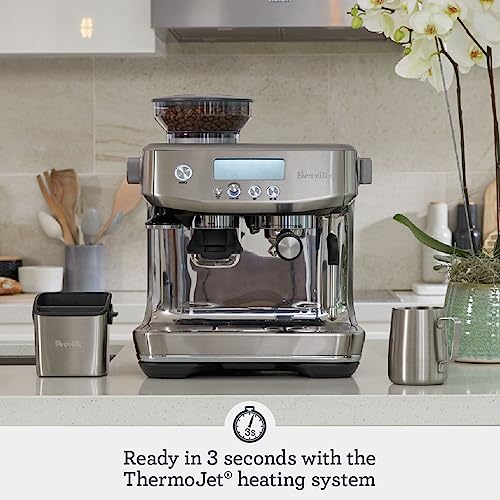
The Breville Barista Pro (BES878) and Barista Express (BES870) are built on the same idea: a conical burr grinder that doses straight into a 54mm portafilter, a 15 bar Italian pump with low-pressure pre-infusion, PID temperature control, and a manual steam wand. Both hold 67 oz of water and 1/2 lb of beans. The differences sit in the heating system, the number of grind settings, how each machine shows you what is happening, and the warranty.
Quick verdict: pick the Barista Pro if you want a machine that heats up in seconds, more grind settings, an LCD screen, and longer warranty coverage. Pick the Barista Express if you like the classic layout with an analog pressure gauge that shows every extraction, and you are comfortable with a shorter warranty on a model with a long owner track record.
This comparison draws on Breville’s published specifications, the Amazon product listings, and Amazon owner reviews. Where a listing and Breville’s own page disagree, we follow the manufacturer. The Amazon data available to us included written owner reviews for the Barista Express but not for the Barista Pro, so owner feedback below applies to the Express only.
Barista Pro vs Barista Express at a Glance
| Spec | Barista Pro (BES878) | Barista Express (BES870) |
|---|---|---|
| Heating system | ThermoJet, ready in 3 seconds, PID control | Thermocoil, PID control, water delivered at 200°F |
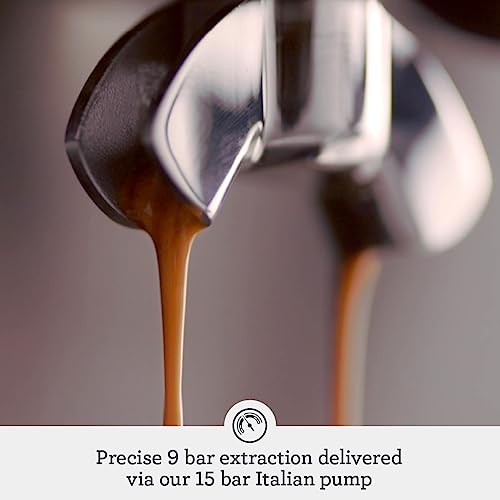
| Pump and extraction | 15 bar Italian pump, low-pressure pre-infusion, 9 bar extraction | 15 bar Italian pump, low-pressure pre-infusion, 9 bar extraction |
| Grinder | Steel conical burrs, 30 grind settings | Steel conical burrs, 16 grind settings |
| Interface | LCD screen and buttons | Buttons, grind amount dial, analog pressure gauge |
| Shot controls | 1 and 2 cup volumetric control | Single or double shots, plus manual override |
| Portafilter | 54mm | 54mm stainless steel, 18g dose |
| Milk texturing | Manual steam wand | Manual steam wand |
| Water tank and hopper | 67 oz, 1/2 lb | 67 oz, 1/2 lb |
| Power | 1680 watts, 120 volts | 1600 watts, 110 to 120 volts |
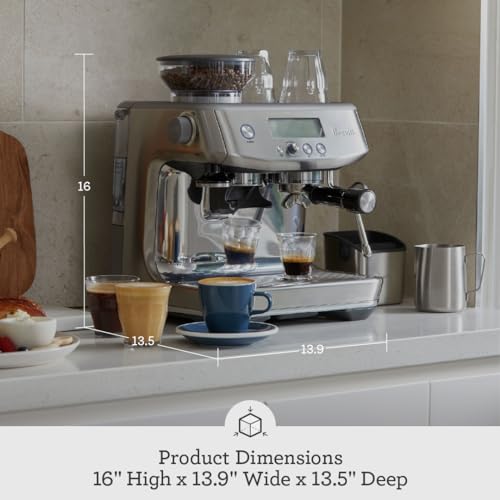
| Dimensions (W x D x H) | 16.1 x 13.8 x 13.1 in | 15.9 x 13.1 x 12.4 in |
| Weight | 20.92 lb | 22.09 lb |
| Warranty | 2 year limited | 1 year limited |
The Amazon listings give dimensions and weights that differ from Breville’s figures, so we use Breville’s measurements above. Both machines carry a bean hopper on top, so check the clearance under your cabinets before you buy.

Breville Barista Pro Espresso Machine with Grinder




Breville Barista Express BES870XL Espresso Machine


The Difference Between the Breville Barista Pro and Barista Express
Heating system and heat-up
This is the biggest hardware change. The Barista Pro uses Breville’s ThermoJet heating system, which Breville rates as reaching extraction temperature in 3 seconds, and the Amazon listing describes an instant switch from espresso to steam. The Barista Express uses the older Thermocoil system with an integrated stainless steel water path, and Breville lists brew water delivered at 200°F under PID control. If you often make a quick shot in the morning, or pull a shot and then steam milk right away, the Pro’s faster heating is the main reason to choose it.
Grinder
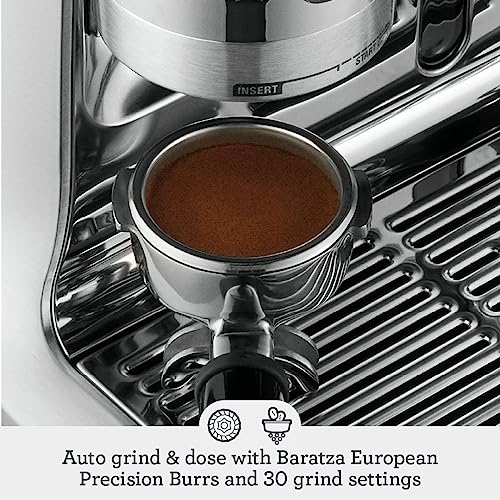
Both machines grind on demand into the portafilter with steel conical burrs. The Barista Pro lists 30 grind settings against 16 on the Barista Express, so the Pro gives you more settings to work with, which helps when you are fine-tuning a shot for a new bag of beans. Breville’s current product page also describes the Pro’s burrs as Baratza European Precision Burrs; the Amazon listing does not mention this, so check with the seller if it matters to you. The Express pairs its grind size dial with a separate grind amount control and a manual override, which lets you grind for as long as you choose.
Controls and shot feedback
The Barista Pro replaces the Express’s analog gauge with an LCD screen that shows grinding and extraction progress, along with customizable settings. The Barista Express keeps simple buttons and an extraction pressure gauge, so you can see at a glance whether a shot ran too fast or too slow. One Express owner calls the gauge invaluable for learning to pull good shots. Neither approach is better for every buyer: the gauge gives direct pressure feedback, while the screen gives a cleaner interface and easier access to settings.
Milk texturing
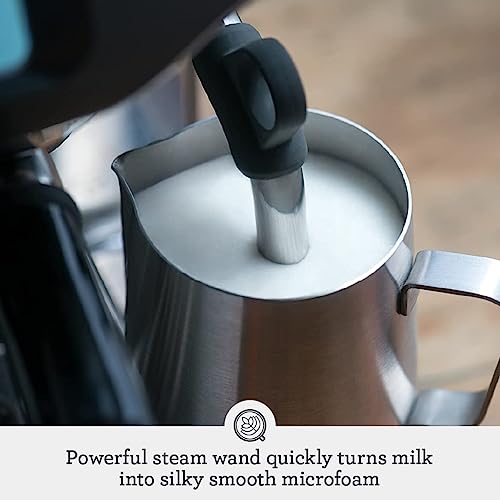
Both have a manual steam wand, so you texture milk yourself. Breville lists manual milk texturing for each, and the Pro ships with a 16 fl oz (480 ml) stainless steel milk jug. If you want the machine to texture milk for you, neither model fits; look at options in our best latte machines instead.
Size, weight, and power
On Breville’s figures the Barista Pro is slightly wider, deeper, and taller than the Barista Express, yet a little lighter. The Pro draws 1680 watts against 1600 watts on the Express. In practice both are large machines that need a dedicated spot on the counter.
Accessories and warranty
Both boxes include a dosing funnel, the Razor dose trimming tool, single and dual wall filter baskets, a stainless steel milk jug, cleaning supplies, and a water filter, and both use a removable magnetic tamper. Breville’s list for the Express also names a coffee scoop, cleaning disc and tablets, a cleaning brush and tool, and an Allen key. The clearer difference is coverage: Breville lists a 2 year limited warranty for the Barista Pro and 1 year for the Barista Express.
What Owners Report
The points below come from written Amazon reviews of the Express; we did not have written reviews for the Barista Pro listing.
- Long service with regular care: one owner reports almost nine years of daily use, following Breville’s cleaning and descaling guidelines, before the automatic 1 and 2 cup shot volume stopped working.
- Grinder setup: some owners report grinder setup issues: one needed a grinder calibration with Breville support before the first grind worked, and another finds the grinder a bit temperamental with certain beans.
- Maintenance: one owner stresses wiping and purging the steam wand after each use and changing the water filter, and owners mention cleaning the grinder and group head. Two owners mention refilling the tank and emptying the drip tray often.
- Hot water: two owners single out the hot water dispenser as a favorite feature, one of them for making Americanos.
- Complaints: one owner describes a gasket failure within the first year and frustrating customer service, another received a faulty first unit that Amazon replaced, one finds steaming loud, and one says the portafilter is hard to seat.
For a deeper look at the older model, see our Breville Barista Express review.
Which Should You Choose?
Choose the Breville Barista Pro if you want the machine ready in seconds, often switch from a shot to steaming milk, want 30 grind steps for finer adjustment, prefer an LCD screen to an analog gauge, and value a 2 year limited warranty.
Choose the Breville Barista Express if you want a pressure gauge that shows each extraction while you learn, like having a dedicated grind amount dial and manual override, and are fine with 16 grind settings and a 1 year limited warranty on a model with a long record of owner feedback.
Skip both if you want one-touch drinks or hands-free milk. A super-automatic machine grinds, doses, and handles milk for you; see our best super automatic espresso machines. If you would rather choose your grinder separately and upgrade it later, pair a machine from our best semi-automatic espresso machines with one of our best espresso grinders. For other all-in-one options, compare our best espresso machines with grinder or browse all espresso machines.
Why You Should Trust Us
We do not conduct our own product trials. Our picks draw on published specifications, independent reviews, and Amazon owner ratings.
The CML Score is calculated with the published method on our How We Review page.
Affiliate commissions do not affect our rankings or scores.
Frequently Asked Questions
Is the Barista Pro worth it over the Barista Express?
If faster heat-up, more grind settings, a screen, and a longer warranty matter to you, the Pro is the better fit. If you want the analog pressure gauge and the manual grind override, the Express covers the same core brewing hardware: a built-in grinder, 54mm portafilter, 15 bar pump, PID control, and pre-infusion.
Do the Barista Pro and Barista Express make the same espresso?
They share the same pump, pre-infusion, 9 bar extraction, PID control, and portafilter size, so with the same beans, dose, and technique they work in a similar way. The Pro’s 30 grind settings give finer control when dialing in, and its ThermoJet system reaches temperature faster.
Does the Barista Pro have a pressure gauge?
Breville does not list a pressure gauge for the Barista Pro. Its LCD screen shows grinding and extraction progress instead. The Barista Express has an analog extraction pressure gauge.
Do either of them froth milk automatically?
No. Both have manual steam wands, so you control the milk jug yourself. Our best milk frothing pitchers covers jugs that make the job easier.
Can I use the same accessories on both?
Both use a 54mm portafilter, so tampers and other accessories sized for 54mm suit either machine. Our best espresso tampers includes 54mm options.
Final Thoughts
The Barista Pro and Barista Express share a grinder-in-the-machine design and the same core brewing hardware. The Pro adds faster heating, more grind settings, a screen, and a longer warranty; the Express keeps the pressure gauge and manual grind override, and one owner credits the gauge with helping them learn. New to espresso? Our guide on how to use an espresso machine covers the basics, and our Breville espresso machine comparison shows how both fit into the wider lineup. For more options, start with our best espresso machines overview.
About the author
Covers home espresso machines, from capsule models to semi-automatic setups, for CoffeeMakerLab.