
The Best Espresso Machines for Beginners
Compare the easiest espresso machines to learn on, from compact budget models to grinders and steam wands, based on owner ratings and independent reviews.
 By Gary Gray
Updated November 4, 2026
Learning to make espresso at home is easier than it used to be, thanks to semi-automatic machines that handle pressure and temperature while leaving the important decisions to you.
For a starter machine, the focus should be on forgiving controls, consistent heat, and a steam wand that does not punish beginner mistakes.
This guide compares the best espresso machines for beginners and opens with our award picks. We ranked the remaining models by CML Score, calculated with the published method on our How We Review page.
Our recommendations draw on published specifications, independent reviews, and Amazon owner ratings across multiple sources. We looked for machines with straightforward controls, reliable milk frothing, and cleaning routines that fit into a normal morning.
If you want to explore a broader range of options, start with our Espresso Machines category, and then use the buying guide below to narrow down what matters for your kitchen.
| Award | Product | CML Score About CML ScoreThe CML Score is calculated with the published method on our How We Review page. Learn more › | |
|---|---|---|---|
| Best Overall |
 De'Longhi ECP3420 15-Bar Espresso Machine |
8.0/10 | Buy |
| Best Value |
 AMZCHEF FC3102 Espresso Machine with Grinder |
9.1/10 | Buy |
| Best Budget |
 Neretva PE3670U 20 Bar Espresso Machine |
8.4/10 | Buy |
| Best Premium |
 Breville Bambino Plus Espresso Machine |
8.6/10 | Buy |
 CHULUX C5010 Slim 20-Bar Espresso Machine |
8.6/10 | Buy | |
 Ninja Luxe Café Mini ES301 Espresso & Drip Combo |
8.4/10 | Buy | |
 AMZCHEF FC3103 Dual Boiler Espresso Machine |
8.4/10 | Buy | |
 CASABREWS 5418 PRO Espresso Machine 20 Bar |
8.4/10 | Buy | |
 Electactic CM5020B Semi-Auto Espresso with Grinder |
8.4/10 | Buy | |
 Electactic CM5431D Espresso Machine with Grinder |
8.4/10 | Buy | |
 CASABREWS Ultra Espresso Machine with LCD |
8.4/10 | Buy | |
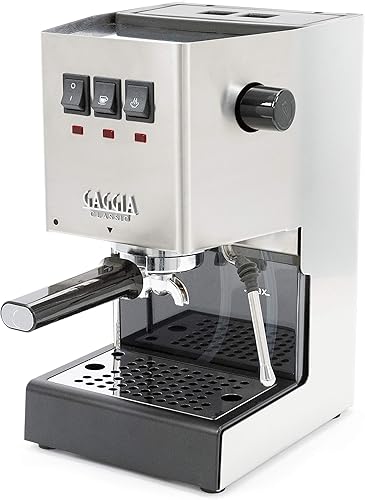 Gaggia Classic Evo Pro Espresso Machine |
8.3/10 | Buy |
De'Longhi ECP3420 15-Bar Espresso Machine
A compact espresso machine with a 15-bar pump and manual frother that accepts ground coffee and easy-serve pods. Owners praise its crema and creamy milk foam, though some report units failing within a year.
Pros
- 15-bar pump for quality espresso
- Manual frother creates creamy foam
- Compact and space-saving design
- Removable, dishwasher-safe parts
- Accepts ground coffee and pods
Cons
- Owners say dialing in shots takes trial and error
- Some owners report units failing within a year
- Plastic body with stainless steel accents
AMZCHEF FC3102 Espresso Machine with Grinder
This semi-automatic espresso machine combines a 40-setting conical burr grinder with a 58mm portafilter for precise dose and extraction control. It also includes a rotating steam wand and one-touch cold brew, which suits home baristas.
Pros
- 40 grind settings for dialing in different beans
- 58mm portafilter for better extraction control
- Includes milk pitcher and cold brew function
- Anti-static system reduces mess
- Touch display with memory settings
Cons
- Mostly plastic exterior
- Dosing is timed, not weighed
Neretva PE3670U 20 Bar Espresso Machine
This compact semi-automatic espresso machine pairs a 20-bar pump with low-pressure pre-infusion and a temperature display. Owners praise its crema and the power of its steam wand for lattes and cappuccinos.
Pros
- Owners praise the crema it produces
- Owners say it heats up quickly
- Powerful steam wand for milk frothing
- Compact footprint saves counter space
- Owners find it easy to use
Cons
- Steam mode needs a cooldown before brewing again
- Ships with pressurized filter baskets only
Breville Bambino Plus Espresso Machine
A compact semi-automatic espresso machine that heats up in seconds and includes an automatic steam wand for microfoam. Its low-pressure pre-infusion and PID temperature control help produce balanced shots, while its small footprint fits easily on tight countertops. It suits beginners and small kitchens where milk drinks are part of the daily routine.
Pros
- Fast heat-up time (3 seconds)
- Automatic steam wand simplifies milk frothing
- Compact footprint fits small counters
- Consistent extraction with pre-infusion and PID
- Auto purge after steaming resets brew temperature
Cons
- Brewing and steaming share one heating system
- No built-in grinder; requires ground coffee
CHULUX C5010 Slim 20-Bar Espresso Machine
This espresso machine packs a 20-bar Italian pump, pre-infusion, and a 30-second preheat into a slim 5.5-inch-wide frame. It suits beginners who want to make lattes and cappuccinos at home without a bulky setup.
Pros
- Quick preheat and brew time
- Steam wand produces creamy microfoam
- Slim footprint saves counter space
- Easy to use for beginners
Cons
- Needs pre-ground coffee; no built-in grinder
- One owner reports noise and cup-shifting vibration
Ninja Luxe Café Mini ES301 Espresso & Drip Combo
The Ninja Luxe Café Mini packs a built-in grinder, precision scale, and manual steam wand into a compact 2-in-1 espresso and drip coffee maker. It uses Barista Assist Technology to auto-calibrate grind, dose, temperature, and pressure, so the machine handles most of the dialing in for newcomers.
Pros
- Built-in grinder and scale
- Manual steam wand for microfoam
- Compact size, 30% smaller than Pro
- Adaptive brewing adjusts temperature and pressure
- Brews espresso and drip coffee
Cons
- Auto calibration leaves less room for manual dialing in
- Heavy at 19 pounds
- Manual steam wand still takes practice for latte-quality foam
AMZCHEF FC3103 Dual Boiler Espresso Machine
A semi-automatic espresso machine with dual boilers and PID control for precise brewing and steaming. Its hands-free frother and OPV system suit home baristas wanting consistent shots and microfoam without complex workflow.
Pros
- OPV regulates pressure within 9 to 12 bar
- Hands-free automatic milk frothing
- Dual PID temperature control
- 58mm commercial portafilter
- Customizable brew and steam settings
Cons
- Cannot brew and steam simultaneously
- Heavy at 24.4 pounds
CASABREWS 5418 PRO Espresso Machine 20 Bar
The CASABREWS 5418 PRO is a compact semi-automatic espresso machine with a 20-bar pump and rapid heat-up. It offers quick steam switching and PID temperature control, which suits home baristas who enjoy milk-based drinks.
Pros
- Flashheat reaches brewing temp in under 5 seconds
- 3-second steam switching saves time
- PID control for consistent milk frothing
- 20-bar pump with pre-infusion for rich crema
- Compact stainless steel design saves counter space
Cons
- No built-in cup warmer
- Requires separate grinder for fresh beans
Electactic CM5020B Semi-Auto Espresso with Grinder
This Electactic espresso machine pairs a built-in grinder with a 15-bar pump and steam wand, making it a practical all-in-one for home espresso, lattes, and cappuccinos. Owner reviews often describe it as easy to use, with a capable steam wand.
Pros
- Integrated anti-clog grinder handles oily beans
- Powerful steam wand for microfoam
- Large 2.8-liter removable water tank
- Easy to clean with detachable drip tray
Cons
- Heavy at 26.2 pounds, 15.75 inches deep
- Milk is frothed manually with the steam wand
Electactic CM5431D Espresso Machine with Grinder
This semi-automatic espresso machine integrates a built-in grinder and steam wand for brewing espresso, lattes, and cappuccinos at home. Its upgraded grind path aims to reduce jams, and the pump extracts flavor and crema from beans.
Pros
- Integrated grinder for fresh grounds
- Anti-clog design handles oily beans
- Detachable water tank and drip tray
- Includes tamper, milk jug, and filter baskets
- ETL certified for safety
Cons
- Limited to bean input only
- Milk is frothed manually with the steam wand
CASABREWS Ultra Espresso Machine with LCD
This semi-automatic espresso maker from CASABREWS pairs a 20-bar Italian pump with an LCD display and adjustable brewing temperature. It includes a steam wand for frothing milk, useful for crafting lattes and cappuccinos at home or in a small office.
Pros
- Adjustable brewing temperature for personalized espresso
- Powerful 20-bar pump for rich extraction
- Steam wand creates microfoam for latte art
- Clear LCD display simplifies operation
- Removable 73 oz water tank for easy refilling
Cons
- Temperature adjustment only applies to espresso brewing
- Requires proper grind and tamping for best results
Gaggia Classic Evo Pro Espresso Machine
This semi-automatic machine from Gaggia uses a 9-bar extraction setting, a commercial-style 58mm portafilter, and a steam wand. It suits home baristas who want a traditional layout and plan to pair it with a separate grinder.
Pros
- Made in Italy with solid steel housing
- Commercial 58mm portafilter and baskets
- Commercial steam wand for microfoam
- Updated boiler resists scale and corrosion
- Quieter brewing with improved pump mounting
Cons
- No built-in grinder
- Heavy at 20 pounds
Best Espresso Machines for Beginners Buying Guide
Machine Type and Learning Curve
Most of the machines in this roundup are semi-automatic, which means the pump delivers water at the right pressure while you control the shot start and stop.
That balance suits beginners because it removes a variable while still teaching the basics of dose, tamp, and extraction time. Simple switches and labeled dials make the process feel less like a chemistry experiment.
Some models include a built-in grinder or an automatic milk frother, which shortens the learning curve even further. If you want to practice the manual skills, choose a machine without those aids.
If you want a more direct path to a latte, a machine with a frother will feel more comfortable.
Pressure and Temperature Stability
Stable pressure and consistent heat matter more than a high maximum pressure rating. A machine that holds temperature between shots will produce more reliable espresso and better crema.
Look for a model with a heated group head or a fast heating system if you plan to make multiple drinks in a row.
Among the machines in this guide, models that heat up quickly make back-to-back drinks easier. If you are making espresso for yourself, a compact model with a small boiler can be enough.
If you regularly make several drinks, choose a machine with a larger reservoir and faster warm-up.
Built-In Grinder vs. Separate Grinder
Fresh grinding is one of the most effective steps you can take toward better espresso, so a machine with a built-in grinder removes a separate purchase and saves counter space.
The models with an integrated grinder here are attractive for beginners because they grind and brew without extra equipment.
For those who prefer to choose their own grinder, a separate burr grinder gives more control later; see our list of the best espresso grinders for guidance.
If you start with a machine that has no grinder, buy a decent grinder before upgrading anything else. Pre-ground coffee loses aroma quickly, and espresso is less forgiving than drip coffee when it comes to particle size.
The easier it is to adjust the grind, the easier it will be to dial in the shot.
Milk Steaming for Lattes and Cappuccinos
Steam wands are a major source of frustration for beginners because getting the angle and texture right takes practice. Automatic frothers solve this by foaming milk for you, while manual wands reward time at the machine.
Choose based on how much control you want over your milk texture.
Most of the machines in this guide include a steam wand or milk frother, but some are more automated than others. If your priority is a quick cappuccino, look for a wand that swivels and cleans easily.
If you are okay with a small learning curve, a standard steam wand will give you a wider range of milk textures over time.
Size, Cleaning, and Maintenance
Counter space is a real concern for espresso machines because they need room for the drip tray, the portafilter, and a cup.
Compact models are easier to store and fit under cabinets, while wider machines offer larger water tanks and more space between the group head and the drip tray. Measure your available space before you buy.
Cleaning routines should be simple enough that you actually follow them. Look for a removable water tank, a detachable drip tray, and a steam wand that can be wiped quickly.
Automatic descaling reminders or a cleaning cycle reduce the guesswork, but never use harsh chemicals on the group head or water tank.
Who Should Look Elsewhere
These semi-automatic machines are ideal for buyers who want to be involved in making espresso without mastering a commercial setup.
If you want a completely automatic experience, where the machine grinds, tamps, brews, and dispenses milk without any manual steps, a super-automatic is easier to learn; our roundup of the best super automatic espresso machines covers models that handle the entire process for you.
Readers who want a simpler setup should also check our best affordable espresso machines guide.
You can still make good espresso with a basic semi-automatic, but you will handle more steps yourself, including steaming milk.
The right pick depends on how much automation you want and how much time you are willing to spend practicing.
Why You Should Trust Us
We do not conduct our own product trials. Our picks draw on published specifications, independent reviews, and Amazon owner ratings.
The CML Score is calculated with the published method on our How We Review page.
Affiliate commissions do not affect our rankings or scores.
Final Thoughts
Best Overall: De'Longhi ECP3420 15-Bar Espresso Machine. A compact semi-automatic espresso machine with a 15-bar pump and manual frother, designed for those who enjoy direct brewing.
Best Value: AMZCHEF FC3102 Espresso Machine with Grinder earns the value award by pairing a grinder with multiple grind settings in the same body, which makes it easy to dial in different beans without buying additional equipment.
Best Budget: Neretva PE3670U 20 Bar Espresso Machine is the budget pick because it is compact, straightforward, and focused on the essentials: a portafilter and a small footprint.
Best Premium: Breville Bambino Plus Espresso Machine is the premium pick for beginners who want automatic milk steaming and refined controls in a counter-friendly size.
Frequently Asked Questions
What type of espresso machine is best for a beginner?
Semi-automatic machines are a good starting point because they automate water pressure and temperature while leaving the shot timing to you. This lets you learn the fundamentals of espresso without fighting the equipment.
Do I need a separate grinder?
Not if you choose a model with a built-in grinder, but a separate burr grinder gives you more control over grind size. For beginners, either approach works as long as the grind is consistent.
A machine with an integrated grinder is the simplest way to start.
How do I clean an espresso machine?
Wipe the steam wand after every use, empty the drip tray regularly, and run water through the group head after your final shot of the day.
Follow the manufacturer’s descaling schedule to keep the heating system clear, and avoid using vinegar unless the manual recommends it.
Can I make lattes and cappuccinos with these machines?
Yes. Most of the machines here include a steam wand or a milk frother, and those with automatic frothing produce consistent foam without much practice. Manual wands take longer to learn but allow you to control the milk texture more precisely.
What is the difference between semi-automatic and super-automatic espresso machines?
A semi-automatic machine requires you to start and stop the shot and usually to steam milk yourself. A super-automatic machine grinds, tamps, brews, and often froths milk at the touch of a button.
If you prefer a direct routine, semi-automatic is a better fit; if you want convenience, super-automatic is easier.
About the author
Covers home espresso machines, from capsule models to semi-automatic setups, for CoffeeMakerLab.