
How to Master the Coffee-to-Water Ratio for Better Brews
Learn what brew ratio means, starting ratios for drip, pour-over, French press, cold brew, and espresso, and how to adjust strength without bitterness.
 By Irene Henderson
Updated October 12, 2026
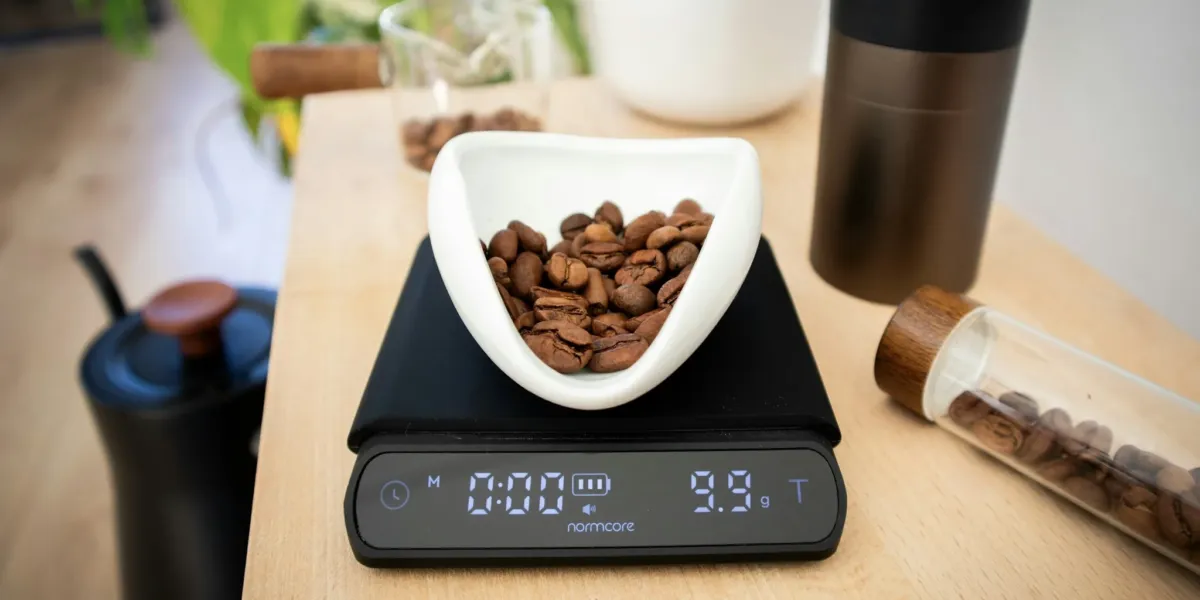
You have a bag of fresh beans, a brewer you trust, and hot water ready. Yet every morning your cup tastes either weak and sour or harsh and bitter. The missing piece is almost always the coffee-to-water ratio.
Getting this simple number right transforms your daily brew from unpredictable to consistently delicious.
This guide explains what brew ratio means, gives you starting points for the most common methods, and shows you how to adjust strength without ruining the flavor.
What Is Brew Ratio?
Brew ratio is the weight of ground coffee compared to the weight of water used for extraction. It is usually written as coffee to water, for example 1:16. That means 1 gram of coffee for every 16 grams of water.
A lower ratio (like 1:12) produces a stronger, more concentrated cup, while a higher ratio (like 1:18) yields a lighter, more delicate brew.
The ratio directly affects how much flavor, acid, and bitterness ends up in your mug, so it is the single most important variable you can control.
Why Weight Matters More Than Volume
Many home brewers rely on scoops or tablespoons to measure coffee. The problem is that bean density, roast level, and grind size change the volume weight relationship dramatically.
A tablespoon of dark roast usually weighs less than a tablespoon of light roast, because darker beans are less dense. Using a kitchen scale eliminates this guesswork. Weighing both coffee and water in grams gives you repeatable results every time.
Once you know the ratio that tastes best to you, you can scale it up or down for any batch size with confidence.
Common Starting Ratios by Brew Method
Every brewing style has a typical ratio range that works well for most palates. Use these as starting points and adjust from there.
Drip Coffee Makers
For a standard drip coffee maker, the National Coffee Association suggests 1 to 2 tablespoons of ground coffee for every 6 ounces of water. For a 12 cup carafe that holds about 60 ounces of water, the National Coffee Association’s guideline works out to roughly 10 to 20 tablespoons of ground coffee. Start in the middle of that range, then adjust stronger or milder.
Pour-Over
For pour-over methods like the V60 or Chemex, the National Coffee Association suggests 1 gram of coffee to 13 to 16 grams of water, and Hario’s V60 instructions start at 1:16. Chemex recommends a medium coarse grind for its brewers, while a V60 is usually brewed with a somewhat finer grind; adjust until the drawdown tastes balanced. The slower pour and filter paper allow for clean, bright flavors.
A gooseneck kettle gives you the control needed for even saturation, but the ratio itself is the foundation.
French Press
The French press uses a metal mesh filter that lets oils and fine particles through, producing a fuller body. For French press, the National Coffee Association suggests 1 gram of coffee to 10 to 16 grams of water (1:10 to 1:16). Many recipes sit toward the middle of that range, so start there and adjust to taste. For a 34 ounce French press (about 1,000 grams of water when full), the National Coffee Association’s 1:10 to 1:16 range works out to roughly 63 to 100 grams of coffee.
The National Coffee Association suggests about 4 minutes of contact time for French press, which extracts plenty of flavor even at a lower ratio.
Cold Brew Concentrate
Cold brew is typically made as a concentrate that you dilute with water or milk. The National Coffee Association suggests 1 gram of coffee to 4 to 5 grams of water (1:4 to 1:5) for cold brew concentrate. For example, the National Coffee Association’s 1:4 to 1:5 range means 100 grams of coffee with 400 to 500 grams of water for a smooth concentrate.
OXO’s cold brew instructions call for steeping 12 to 24 hours, and the National Coffee Association notes you can steep in the refrigerator or at room temperature for about 12 hours, or overnight. After steeping, OXO recommends mixing one part concentrate with two or three parts water or milk. A dedicated cold brew maker simplifies the process, but any container works with the right ratio.
Espresso
Espresso uses a much tighter ratio because the brew volume is small and the extraction is pressurized. A barista survey published by the Specialty Coffee Association found an average espresso ratio of 1:2, with responses ranging from 1:1.5 to 1:2.5. For a double shot, the same barista survey found an average dose of 18 to 20 grams with an output of about 36.5 grams, close to a 1:2 ratio.
The exact ratio depends on your machine and taste, but staying in this range helps avoid shots that taste thin, sour, or bitter. Proper espresso tampers help ensure even puck density for consistent results.
How to Adjust Strength Without Bitterness
Many people try to make coffee stronger by using more coffee grounds at the same water volume. That works up to a point, but if you push it too far, there is too little water to extract the grounds fully, and the cup can turn heavy and sour rather than richer.
A better approach is to adjust the ratio within the recommended range and also fine-tune your grind size and water temperature. For a stronger cup without bitterness, try a slightly finer grind and a little more coffee for the same amount of water.
If the coffee tastes harsh or astringent, back off to a coarser grind or a higher ratio. Remember that the National Coffee Association recommends water of about 194°F to 205°F (93 ± 3°C) for pour-over and French press. Going hotter can also pull out bitterness.
Frequently Asked Questions
What is the golden ratio for coffee?
The National Coffee Association calls 1 to 2 tablespoons of ground coffee for every 6 ounces of water its “Golden Ratio,” and it works well as a starting point. However, personal preference varies. If you brew pour-over by weight, the National Coffee Association suggests 1 gram of coffee to 13 to 16 grams of water.
Can I use tablespoons instead of grams?
You can, but it is less precise. Chemex estimates one rounded tablespoon of ground coffee at approximately 5.3 to 5.5 grams, though the weight varies with roast and grind. For consistent results, a scale is worth the investment. Many affordable models are available in our coffee accessories collection.
How do I scale a recipe for a different batch size?
Divide your desired water weight by the ratio number. For a 1:16 ratio and 500 grams of water, use 500 ÷ 16 = 31.25 grams of coffee. For a larger batch, scale both numbers up by the same factor.
Why does my coffee taste bitter even with the right ratio?
Bitterness often comes from over-extraction caused by water that is too hot, a grind that is too fine, or a brew time that is too long. Check your water temperature and try a slightly coarser grind.
Also make sure your equipment is clean; old coffee oils can add bitter flavors.
How much coffee should I use for a single cup?
For an 8 ounce cup (about 240 grams of water) at a 1:16 ratio, use 15 grams of coffee. Adjust the ratio to your taste. A single cup is a great way to dial in your preferred strength before scaling up.
About the author
Writes the brewing guides and buying explainers at CoffeeMakerLab.