
The Best Espresso Machines Under $1000
Best espresso machines under $1000 compared by workflow, grinder, milk steaming, and maintenance, based on owner ratings and independent reviews.
 By Gary Gray
Updated October 31, 2026
For home drinkers who want to pull espresso without stepping up to commercial equipment, a machine under $1000 offers a realistic middle ground between basic entry-level appliances and expensive specialty machines.
This roundup compares each model by workflow, grinder, and milk steaming rather than by marketing claims alone.
We evaluated the best espresso machines under $1000 using published specifications, independent reviews, and Amazon owner ratings. The comparison list opens with our award picks. We ranked the remaining models by CML Score, calculated with the published method on our How We Review page.
For more context on how these machines fit into the wider category, start with our Espresso Machines coverage, which includes guides for other price ranges and brew styles.
| Award | Product | CML Score About CML ScoreThe CML Score is calculated with the published method on our How We Review page. Learn more › | |
|---|---|---|---|
| Best Overall |
 Breville Barista Express BES870XL Espresso Machine |
8.4/10 | Buy |
| Best Value |
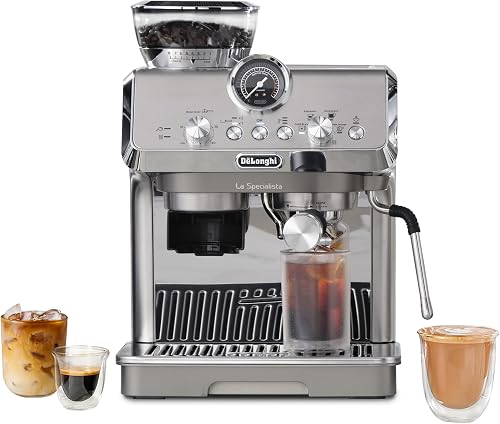 De'Longhi La Specialista Arte Evo Espresso Machine |
8.1/10 | Buy |
| Best Budget |
 Gaggia Classic Evo Pro 9-Bar Espresso Machine |
8.3/10 | Buy |
| Best Premium |
 Rancilio Silvia Espresso Machine, 12 oz Boiler |
8.3/10 | Buy |
 Breville Barista Pro Espresso Machine with Grinder |
8.4/10 | Buy | |
 Breville Barista Express Impress Espresso Machine |
8.1/10 | Buy | |
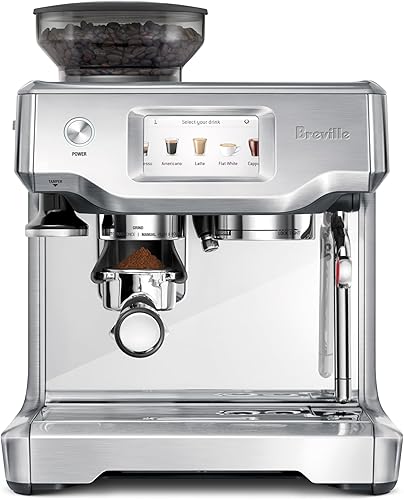 Breville Barista Touch BES880BSS Espresso Machine |
8.1/10 | Buy | |
 De'Longhi La Specialista EC9335M Espresso Machine |
8.0/10 | Buy |
Breville Barista Express BES870XL Espresso Machine
An all-in-one espresso machine with a built-in conical burr grinder and PID temperature control, designed for home baristas who want fresh-ground espresso and manual milk texturing. It suits those willing to learn the craft and maintain the machine regularly.
Pros
- Built-in grinder saves counter space
- PID temperature control enhances extraction consistency
- Steam wand produces quality microfoam
- Includes many accessories and tools
- Grind size dial with manual dose override
Cons
- Requires regular maintenance and cleaning
- Milk is textured by hand with the steam wand
- Heavy at 22.1 pounds
De'Longhi La Specialista Arte Evo Espresso Machine
The De'Longhi La Specialista Arte Evo is a semi-automatic espresso machine with a built-in conical burr grinder, 8 grind settings, and a commercial-style steam wand. Its standout feature is Cold Extraction Technology, which brews cold brew in under five minutes, and Active Temperature Control with three infusion settings. Suited to home baristas who want direct control, it includes a barista kit and four presets.
Pros
- Cold brew in under 5 minutes
- Built-in grinder with 8 settings
- Three temperature settings
- Powerful steam wand
- Mess-free barista kit
Cons
- Heavy at 25.8 pounds
- Plastic and stainless steel build
Gaggia Classic Evo Pro 9-Bar Espresso Machine
A made-in-Italy semi-automatic espresso machine with commercial-grade components, including a 58mm portafilter and steam wand. It brews at 9 bars of pressure and is well-suited for enthusiasts who want control over their shots.
Pros
- Updated boiler resists scale and corrosion
- Commercial portafilter and baskets included
- Solid steel housing and Italian build
- Good steam power for microfoam
- Self-serviceable design
Cons
- Owners note it needs a separate grinder and practice
- Some owners report a long warm-up period
- Heavy at 20 pounds
Rancilio Silvia Espresso Machine, 12 oz Boiler
The Rancilio Silvia is a traditional semi-automatic espresso machine built with commercial-grade components, including a 58mm portafilter and a chrome-plated brass boiler. It appeals to home baristas who prioritize durability and extraction quality over convenience features.
Pros
- Commercial-grade group head for excellent heat stability
- 58mm portafilter matches commercial Rancilio machines
- Large 12 oz boiler for strong steaming power
- Articulating steam wand with precise control
- Durable iron frame and stainless steel panels
Cons
- Heavy at 30.8 pounds
- Includes a plastic tamper
- Pod use requires an optional adapter kit
Breville Barista Pro Espresso Machine with Grinder
The Breville Barista Pro combines a built-in conical burr grinder with a fast ThermoJet heating system, delivering precise espresso extraction in under a minute. Its intuitive LCD interface and manual steam wand make it a strong fit for home baristas seeking third-wave style coffee without a separate grinder.
Pros
- Fast heat-up time with ThermoJet system
- Built-in grinder with dose control
- Precise PID temperature regulation
- Powerful steam wand for microfoam
- Beginner-friendly LCD interface
Cons
- Milk is textured by hand with the manual steam wand
- Heavy machine, so check counter space before buying
Breville Barista Express Impress Espresso Machine
The Breville Barista Express Impress is a semi-automatic espresso machine that combines an integrated conical burr grinder with an assisted tamping system to simplify the puck preparation process. It features a manual steam wand for milk texturing and a PID-controlled Thermocoil heating system, making it suitable for home baristas seeking consistent espresso-based drinks.
Pros
- Assisted tamping with consistent 10kg pressure
- Intelligent dosing system adjusts dose automatically
- 25 grind settings for fine-tuning extraction
- Thermocoil with PID for stable temperature
- Includes useful accessories and cleaning tools
Cons
- Heavy machine, so check counter space before buying
- Milk must be hand-textured with the steam wand
Breville Barista Touch BES880BSS Espresso Machine
This Breville Barista Touch combines a built-in conical burr grinder with a touchscreen interface and automatic milk frothing, making espresso-based drinks straightforward. It uses a ThermoJet heating system to reach extraction temperature in three seconds and offers programmable settings, suiting those who want a guided experience from bean to cup.
Pros
- Fast heat-up time.
- Integrated grinder and touchscreen controls.
- Automatic milk frothing with adjustable settings.
- Consistent extraction with PID temperature control.
- Includes multiple accessories and water filter.
Cons
- Some owners note a learning curve when dialing in.
- One owner found the bean hopper tricky to empty when switching beans
- Heavy at 21.8 pounds.
De'Longhi La Specialista EC9335M Espresso Machine
A semi-automatic espresso machine with a built-in sensor grinder and smart tamping station that simplifies the workflow. It offers dual heating for brewing and steaming, plus a hot water spout for Americanos and tea, which suits home baristas.
Pros
- Sensor grinder delivers consistent doses
- Smart tamping station for consistent pressure
- Separate heating systems for brewing and steaming
- Advanced Latte System for microfoam
- Separate hot water spout for Americanos and tea
Cons
- Heavy at 29.7 pounds
- Tall 17.5-inch height needs cabinet clearance
Best Espresso Machines Under $1000 Buying Guide
Choose a Workflow That Fits Your Routine
Your daily routine should decide whether you want a machine with a built-in grinder, a separate grinder, or no grinder at all. Many of the best espresso machines under $1000 include a grinder, which shortens the path from beans to cup.
If you already own a good grinder, you can focus on machines that give you more control over the brew and save money on components you do not need.
Think about how many drinks you make in a sitting. A machine that suits a quick morning espresso may feel different from one that can handle several milk drinks back to back. The right workflow depends on your patience for grinding, dosing, and cleanup.
Evaluate the Built-in Grinder
A built-in grinder is convenient, but it needs to be consistent enough for espresso. Look for models with a real burr grinder rather than a blade grinder, because burrs produce a more uniform particle size.
If you already have a dedicated espresso grinder, a machine without a built-in grinder may give you better results for the same budget.
For more on this topic, see our buying advice for burr coffee grinders. That guide explains what to look for in grind consistency, range, and adjustment steps.
Consider Milk Steaming Performance
If you plan to make lattes or cappuccinos, the steam wand matters as much as the brew unit.
Machines with a dedicated steam wand give you direct control over aeration and texture, while automated milk systems are easier for beginners but leave less room to adjust.
Check whether the machine uses a shared boiler, a heat exchanger, or a dual heating system for steaming. The key is whether you can brew and steam without waiting too long. Some machines switch between modes quickly, while others need a short pause.
Factor in Size and Maintenance
Espresso machines take up counter space, so measure your kitchen before choosing. Models with an integrated grinder tend to be taller and deeper than those without a grinder, and you also need room to open the water tank and drip tray.
Routine maintenance matters too. A machine with fewer internal parts and a removable water tank is easier to clean and descale. Look for accessible drip trays, easy-to-reach water reservoirs, and clear instructions for backflushing or cleaning the brew group.
Who Should Look Elsewhere
Readers who want automatic espresso drinks without grinding, dosing, or tamping should consider a super-automatic espresso machine instead of the semi-automatic models in this list.
Those machines handle the full workflow automatically, which is better for households that value convenience over manual control. Our best super-automatic espresso machines guide explains the trade-offs in detail.
If you want a machine with a lower spending limit, see our budget espresso machine picks.
Why You Should Trust Us
We do not conduct our own product trials. Our picks draw on published specifications, independent reviews, and Amazon owner ratings.
The CML Score is calculated with the published method on our How We Review page.
Affiliate commissions do not affect our rankings or scores.
Final Thoughts
Best Overall: Breville Barista Express BES870XL Espresso Machine combines a built-in conical burr grinder, PID temperature control, and a powerful manual steam wand in a complete package that suits most home baristas.
Best Value: De'Longhi La Specialista Arte Evo Espresso Machine puts a built-in conical burr grinder with 8 grind settings, a commercial-style steam wand, and Cold Extraction Technology into one machine.
Best Budget: Gaggia Classic Evo Pro 9-Bar Espresso Machine gives you an espresso-first machine with simple controls, a 58mm stainless steel commercial portafilter, and a commercial steam wand.
Best Premium: Rancilio Silvia Espresso Machine offers the kind of sturdy build and no-frills controls that make sense for someone who wants a machine to grow into.
Frequently Asked Questions
Do I need a separate grinder if the machine has a built-in grinder?
Not necessarily. A built-in burr grinder is enough for many home users, and it makes the morning routine shorter. If you want to experiment with different roasts or dial in your grind more precisely, a separate espresso grinder gives you more control.
How often should I clean my espresso machine?
Wipe the steam wand after each use and empty the drip tray regularly. The frequency of deeper cleaning depends on how many shots you pull, so follow the schedule in your owner’s manual.
Descaling at regular intervals based on your water hardness will keep the machine performing consistently.
Can I steam milk and brew espresso at the same time?
Most machines in this roundup use a shared heating system, so you will switch between brewing and steaming rather than doing both at once.
Models with a dual heating system or a fast heat-up time shorten the wait, but for most home recipes the pause is short enough to fit into your routine.
What kind of coffee works best in an espresso machine?
Espresso machines work best with freshly roasted beans ground to a fine, consistent size. Look for beans labeled for espresso, or choose a medium or medium-dark roast that suits your taste.
Pre-ground coffee is less forgiving because it loses aroma quickly and is harder to adjust.
How do I descale an espresso machine?
Use a descaling solution recommended by the manufacturer and follow the machine’s descaling routine. The goal is to remove mineral buildup from the boiler and water lines, which can affect temperature stability and flavor.
If your water is hard, you may want to descale more often.
About the author
Covers home espresso machines, from capsule models to semi-automatic setups, for CoffeeMakerLab.